A sound system is a room problem before it is an equipment problem.
Most of the commercial sound systems we are called to replace were not badly built. They were correctly built for a different room. Somebody bought four good speakers, hung them where the ceiling allowed instead of where the coverage needed them, set the volume with a knob that anyone can reach, and the room has been fighting it ever since.
So the first thing we do is not pick speakers. It is walk the room, at the hour it is busy, and find out where the sound has to land, where it must not land, and what the ceiling will let us do.
If a system is designed around what the ceiling allows rather than where people sit, it will be too loud at two tables and too quiet at the other twenty, forever.
What we are looking at on the site visit
- Where the hard surfaces are. The complaint "we cannot hear each other" is usually glass, tile, concrete and a bare ceiling, not a shortage of speakers. Adding volume to a reflective room makes it worse. Sometimes the honest answer is fewer speakers, aimed better, plus something soft on one wall.
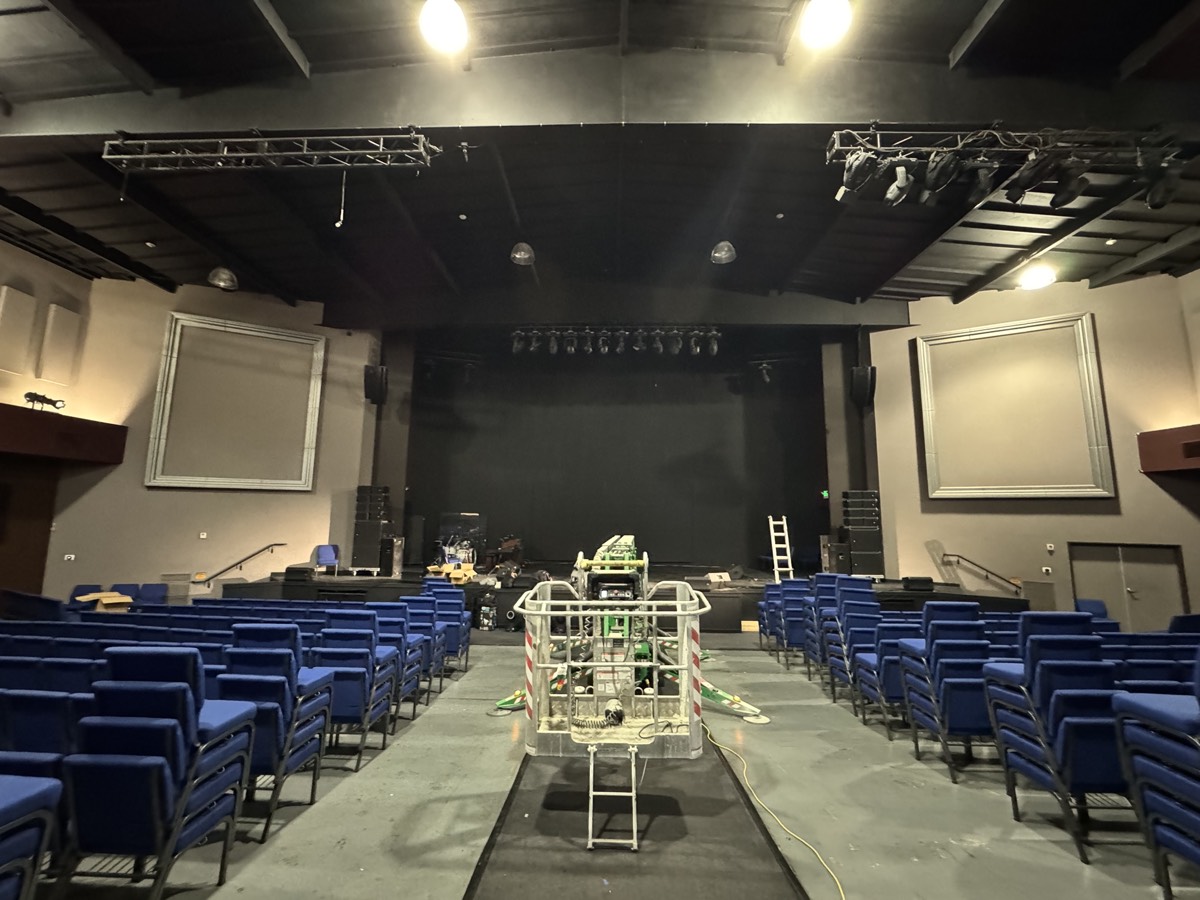
- What is above the ceiling. A drop tile grid with clear plenum is the easy case. A hard lid, a pressed tin ceiling, a sprinkler main running exactly where a speaker wants to be, or a landmark ceiling nobody is allowed to drill: each of those changes the speaker, the mount and the cable path, not just the price.
- The electrical panel. Amplifier racks want their own circuits. We have had to run new wire for 220 circuits and pull new 110 lines on install jobs more than once, and that work has to be scheduled with a licensed electrician before anyone hangs a speaker.
- Where the rack can live and still be serviced. A rack behind a built in banquette is a rack nobody will ever open. We would rather lose the pretty location and keep the access.
- Who is going to touch it at 9pm on a Saturday. This decides the control interface more than anything else on this list.
What a commercial install includes when we do it
Design and coverage plan
Speaker count and placement set by the room and the seating, with the zones named before anything is ordered. You see the plan before you spend.
Power, cable and mounting
Cable paths, backboxes, mounts and brackets, coordinated with your electrician for any new circuits and with your GC if the room is still being built.
Zoning and limits
Dining room, bar, patio and back of house on separate zones at separate levels, with the ceiling set in the processor instead of left on a knob.
Programming and commissioning
The line most quotes leave out. Processor settings, delays, limiters, presets and alignment, done after the gear is in and the room is dressed.
Staff handover
A control interface your team can run on a busy night, and a short walkthrough with the people who will actually use it, not just the owner.
Maintenance after
Most clients keep us on a quarterly check. We retune, update firmware, replace what has failed and take the call when something goes down mid service.
Programming is not a rounding error on the install.
On our own invoices, programming and labor sit on the same line as the gear often enough that it is worth saying plainly: the processor work is where a system becomes usable or stays annoying. Zone levels, delay between the near and far speakers, a limiter that holds the room at the level you agreed instead of the level the loudest bartender wants, scene presets for brunch and for a Saturday night.
A system with good speakers and no programming sounds like a system with bad speakers. We have been hired to fix exactly that, more than once, and the fix was a laptop and an afternoon, not new boxes.
Upgrading instead of replacing
If you already have a system, we assess what is there first: speakers, cabling, amplifier panels, processor. Cable in a wall is expensive to replace and often perfectly good. Plenty of rooms need two speakers moved, one amplifier swapped and the processor set up properly, and nothing else. We will tell you that even though it is the smaller job, because the alternative is selling you a teardown you did not need and then owning the room's reputation afterwards.
Rooms we work in
Restaurants, bars, lounges, nightclubs, event venues, corporate offices and hospitality spaces across New York, New Jersey and Connecticut. Over 20 years the bulk of our install work has been in NYC restaurants, lounges and event venues, which is why the practical constraints on this page are specific rather than general.
We are an installation business. If you need gear for one night rather than a system in the ceiling, that is a rental and it belongs with a rental house, not here.
Have a room that is fighting its sound system?
We walk the room, measure, and send a design and an estimate. The visit and the design cost nothing.
Request a free site visit Or call or text (646) 280-9522. Ozzy answers his own phone.